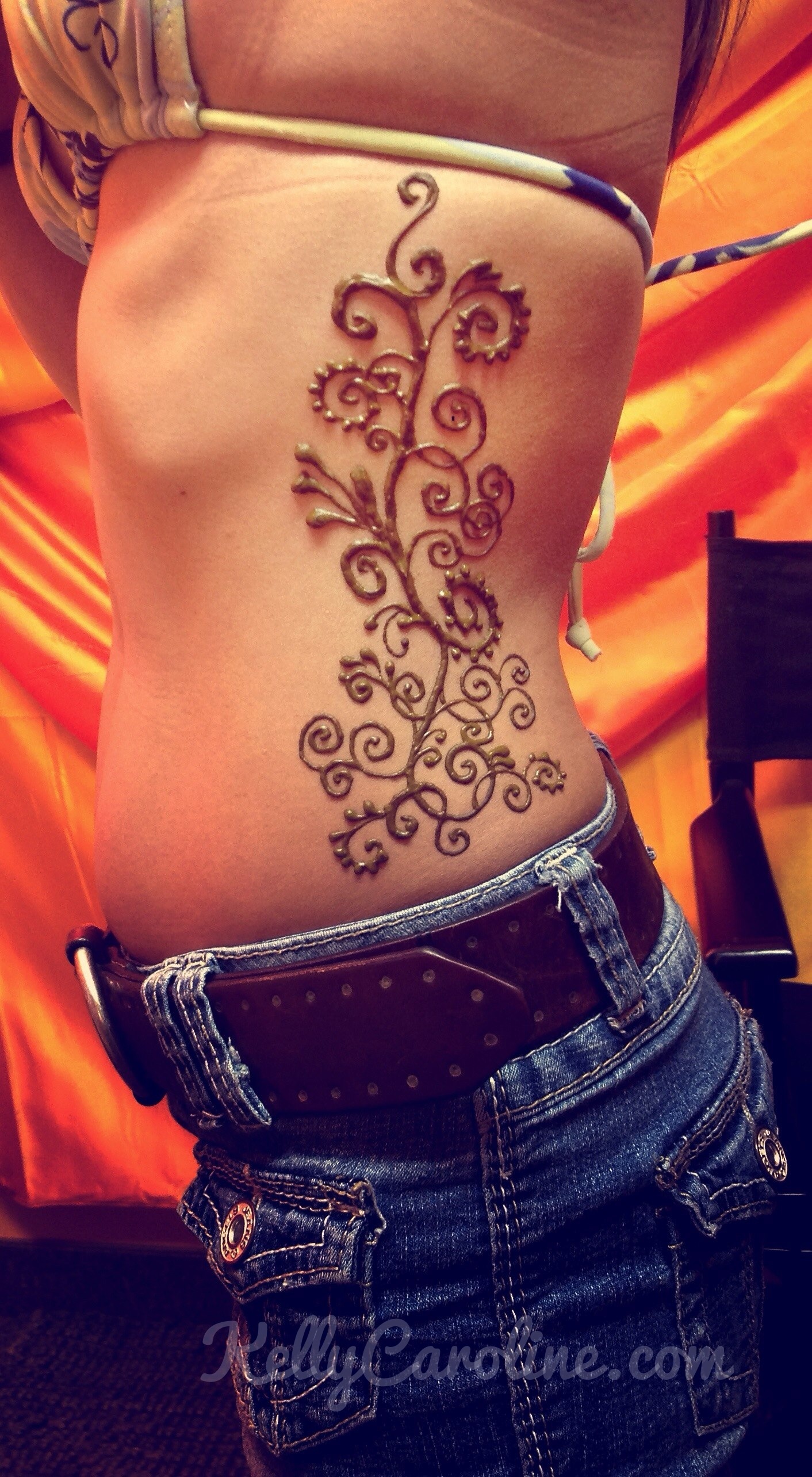
Henna Design Tattoos Definations
source(google.compk)Derived from the Sanskrit word ‘mendhika’, henna (known as mehndi in hindi) finds itself mentioned in the earlier Vedic ritual books of Hinduism. Largely used by the people of India, Pakistan, Nepal, and Bangladesh for skin decoration, it has gained immense recognition and acceptance among women of the Middle East and North African countries. It is mostly applied during special occasions, like weddings, and on festivals, which include Karva Chauth, Raksha Bandhan, Teej, Diwali, Eid-ul-Fitr, and Eid-ul-Adha. Originally a form of decoration for Hindu brides, the trend of beautifying hands and feet was rapidly adapted by Muslims as well. Until recent times, mehndi was the preferred way of dying hair for millions of people in India and Middle East. It makes the color of the hair reddish and also conditions them. A natural dyer, it never harms the hair like synthetic dyes. It helps the hair in getting rid of dandruff, making them strong and easier to manage. However, the history of henna takes one 6,000 years back, to the land of Ancient Egypt. Get to know more about the history of mehndi, with a steer through the following text.
Origin of Henna
The exact origin of henna is difficult to track as various scriptures indicate its use in different regions at different time periods. There have been mentions of various conflicting stories regarding the first use of henna. While some believe that henna was introduced in India in the 12th century by the Mughals as a ceremonial form of art, others claim its existence for more than 6,000 years in Ancient Egypt where it was considered beneficial due to its cosmetic properties. Its popularity was not just confined to aesthetic and sacred qualities, but was in use for its medicinal and healing properties as well.
Ancient documents specify the use of henna for coloring toes and fingers of Pharaohs before mummifying them. Also, the study of mummies dating back to 1200 BC indicates that the Pharaohs used henna to color their hair and nails. In India, it was mainly used by the rich and royal classes for decorating themselves with patterns, sketched out by artists or beauticians. Besides, when the cooling properties of henna were discovered, it was used by people living in deserts to paint their skin and bring down their searing body temperatures.
However, it became prominent across different regions of India only in the 20th century when brides started getting their hands adorned with traditional designs on weddings and festivals. Today, it not only centers on weddings and religious festivals, but portrays a deeper meaning for the women of India. It is assumed to be a good sign of love, fortune and purity, and hence, used on auspicious occasions, like births and naming ceremonies, birthdays, holidays, and circumcisions. Until a few years back, henna was used as a hair dye in the United States. It is only recently that it gained popularity as a temporary alternative to the permanent tattoos that stay on for life-long, thus letting an individual decorate his/her body parts with different designs, without the fear of side or harmful effects.
For over 5,000 years, the people of Africa, Middle East and India have practiced the beautiful and mysterious art of painting on the body with preparations using the henna plant. This artform is called henna art and sometimes referred to as Mehndi, in India.
The henna plant is thought to come from Egypt where it was called Egyptian Privet. Later henna was brought to India as a state gift from the Egyptians. Queen Mumtaz who ruled in the 1600's was the first Indian queen to be decorated with henna. Today, it is common to find artists practicing their henna crafts outside the Taj Mahal, which was built to honor Queen Mumtaz. Traces of henna have been found on mummies from 1200 BC. It is also known that Pharoahs hands and feet were first dipped in henna prior to mummification.
Traditionally, henna and the Mehndi artform is an important part of wedding ceremonies. The hands and feet of the bride are decorated by professional henna artists, called Hannayas or Naqashas in Morocco. The intricate and beautiful designs cover her hands and feet in a lacy manner. It is common belief that henna brings good luck. Ornementing the bride's hands and feet with henna is believed to bring love, health, prosperity, safety in childbirth, protection from harmful spirits and assure happiness in death as well.
Henna tattooing is the hottest trend to come from the East. Its popularity exploded in 1998 in New York city, and is fast becoming the most sought after, fascinating beauty creations in North America. Many celebrities have been proud to show their henna tattoos in public, on the big screen, and in music videos.
The color of henna depends upon its place of origin and the quality of plant cultivated there. The practice of applying henna varies across cultures and traditions. The designs applied on hands signify different meanings in different cultures. Each culture has its own set of distinct designs, thus defining its uniqueness. While Arabic patterns comprise of large, floral designs, the Indian designs are known for their lacy, floral, and paisley patterns sketched with fine lines. On the other hand, African and Native / South American Indian designs are characterized by bold, large geometric designs in black color.
With Arabic and Middle Eastern designs gaining extreme recognition, people across the world have now started preferring these contemporary styles over the traditional designs, leaving the latter only for brides.
Henna Design Tattoos For Hand Feet Arabic Beginners Kids Men

Henna Design Tattoos For Hand Feet Arabic Beginners Kids Men

Henna Design Tattoos For Hand Feet Arabic Beginners Kids Men

Henna Design Tattoos For Hand Feet Arabic Beginners Kids Men

Henna Design Tattoos For Hand Feet Arabic Beginners Kids Men

Henna Design Tattoos For Hand Feet Arabic Beginners Kids Men

Henna Design Tattoos For Hand Feet Arabic Beginners Kids Men
Henna Design Tattoos For Hand Feet Arabic Beginners Kids Men

Henna Design Tattoos For Hand Feet Arabic Beginners Kids Men

Henna Design Tattoos For Hand Feet Arabic Beginners Kids Men
.jpg)